What If There Is No Will? How Probate Home Sales Work in Central Texas
Most people in a probate situation say they are not sure where to begin. And then somewhere in that first conversation, they say it.
"There was no will."
That changes things. But it does not make the situation impossible. It just means the process looks a little different.
If you have inherited a home in Central Texas and there is no will, here is what you need to know.
What Happens When Someone Dies Without a Will in Texas?
When a person dies without a will, Texas law refers to that as dying intestate.
The state does not leave the property in limbo. Texas has a clear set of rules that determine who inherits what. Those rules are found in the Texas Estates Code, and they follow a specific order based on family relationships.
A surviving spouse, children, parents, and siblings each have defined rights depending on the circumstances. Who inherits the home and in what share depends on the exact family situation.
This is why one of the first calls you make should be to a probate attorney in the county where the property is located.
Who Has the Authority to Sell the Home?
This is the question that matters most in the early stages.
When there is a will, the executor named in that will typically has the authority to act once the court formally appoints them.
When there is no will, no one has that authority automatically.
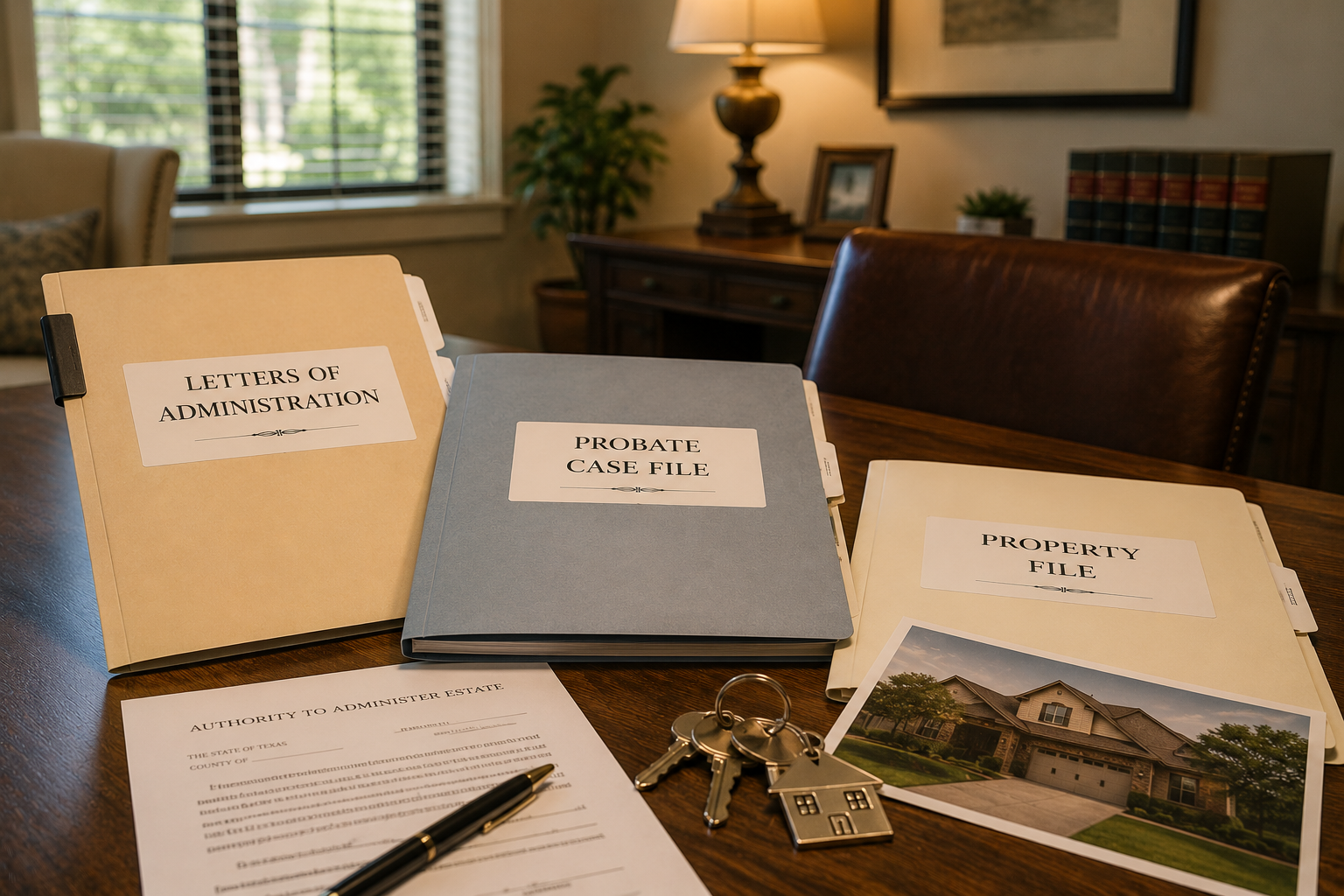
The court must appoint an administrator. That person steps into a role similar to an executor. They are responsible for managing the estate, paying any debts, and ultimately handling the sale of the property.
Until the court appoints an administrator and issues Letters of Administration, no one has the legal standing to sell the home. A title company will not insure the transaction without that documentation in place.
If you are not sure where the process stands, a probate attorney can answer that quickly.
Is the Process Harder Without a Will?
In some ways, yes. In others, not as much as people fear.
Without a will, Texas courts may apply dependent administration rather than independent administration. Independent administration gives the executor significant freedom to act without court approval at every step. Dependent administration involves more court oversight.
That additional oversight takes more time. It can also cost more in legal fees.
However, if all heirs agree and the estate is straightforward, the court can sometimes grant independent administration even when there is no will. Having an experienced probate attorney from the beginning is what makes that conversation possible.
The key variable is whether heirs are in agreement. When everyone is aligned, things move. When they are not, the process slows significantly.
If you are wondering how the selling process works once authority is established, how do I sell a home through probate in Central Texas walks through that in detail.
What About the Other Heirs?
When there is no will, the question of who inherits what can get complicated quickly.
Texas intestate succession law divides property among heirs based on family relationships. A surviving spouse does not automatically inherit everything. Children from a prior relationship may have a share. Siblings may be involved if there are no children.
Each of these situations is different. And each one requires clarity before any sale can move forward.
What this means practically is that all heirs need to be identified and notified. Outstanding debts need to be addressed. And everyone involved needs to understand the timeline before the property can transfer to a new buyer.
An experienced probate real estate agent knows how to work within that reality. Not every agent does.
Can the Home Be Sold Quickly?
It depends on the complexity of the estate and how quickly the court process moves.
In straightforward situations where heirs agree and debts are manageable, things can move relatively efficiently. In situations with disagreement, unknown heirs, or complicated debt, the process takes longer.
What you want in place from the beginning is a probate attorney handling the legal side and a real estate agent handling the property side. Both working together from day one is what keeps things from stalling.
For a broader picture of what probate real estate involves, what is probate real estate and how does it work in Central Texas is a clear starting point.
What Should You Do First?
Start with the legal side.
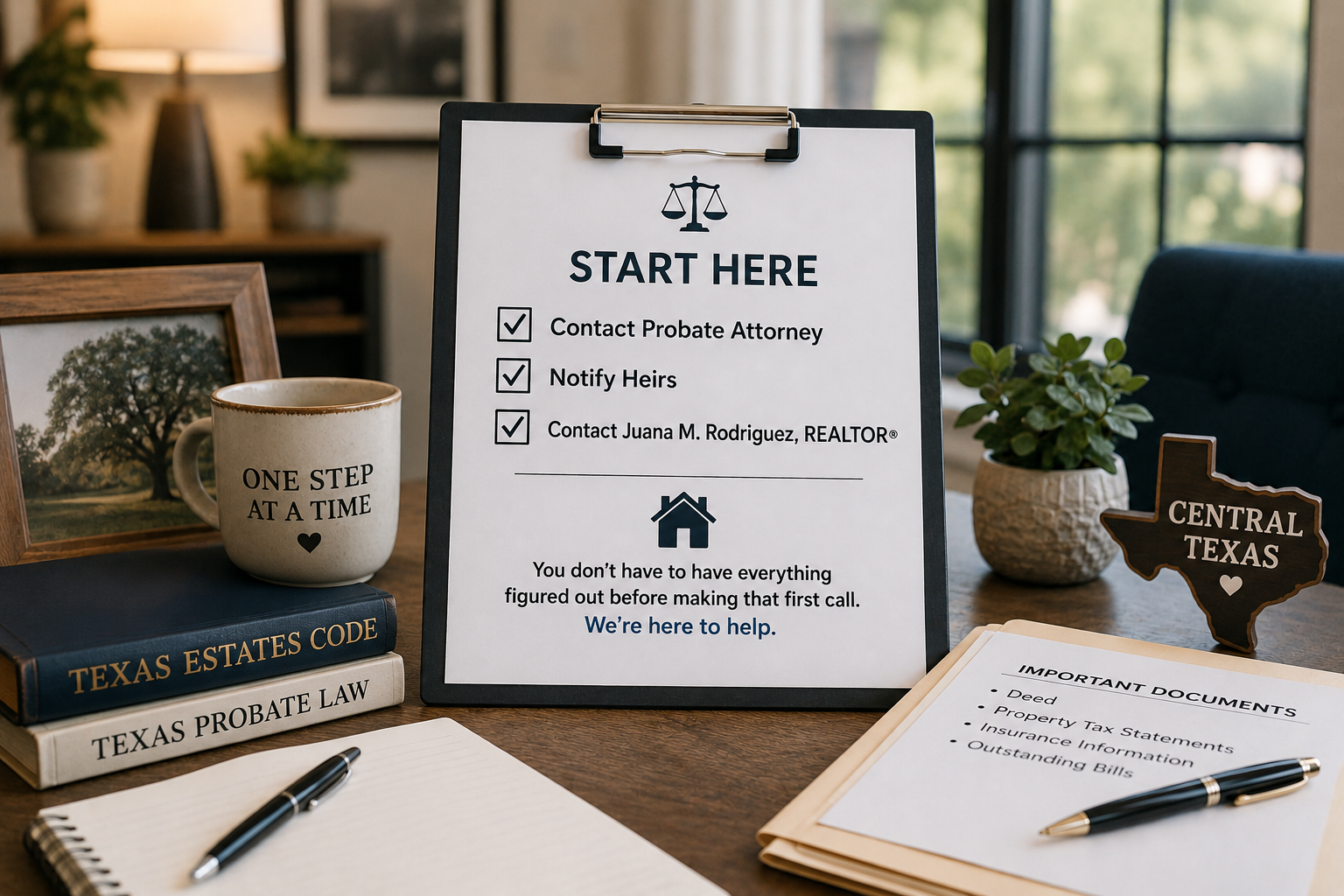
Contact a probate attorney in the county where the property is located. For properties in Georgetown, Round Rock, Liberty Hill, Hutto, or Pflugerville, that is Williamson County. For properties in Temple, Belton, Killeen, Salado, or Harker Heights, that is Bell County.
At the same time, reach out to a real estate agent with real probate experience. Someone who understands the court timeline, knows how to coordinate with the attorney, and can guide the family through without adding pressure to an already difficult situation.
You do not need to have everything figured out before making that first call. Most families come to me with more questions than answers. That is expected.
Frequently Asked Questions
What does intestate mean in Texas?
Intestate means a person passed away without a valid will. When that happens, Texas law determines how the estate is distributed through a process governed by the Texas Estates Code. The property does not automatically transfer to one person. The court oversees the process and distributes assets according to the legal order of inheritance.
Who inherits a home in Texas when there is no will?
It depends on the family situation. A surviving spouse, children, parents, and siblings may all have a legal share depending on the circumstances. Texas intestate succession law is specific about the order and percentage of inheritance. A probate attorney can tell you exactly what applies to your situation.
Can the home be sold before the court appoints an administrator?
No. Without a court appointed administrator and the issuance of Letters of Administration, no one has the legal authority to sell the property. A title company will not insure the sale without that documentation.
What is the difference between an executor and an administrator?
An executor is named in a will and appointed by the court to carry out the wishes of the person who passed away. An administrator is appointed by the court when there is no will. Both roles involve managing the estate and handling the sale of property, but the administrator's authority comes entirely from the court rather than from a document their loved one left behind.
Does dying without a will mean probate takes longer in Texas?
It often does, though not always. Without a will, the court may require more oversight through dependent administration. If heirs are in agreement and the estate is straightforward, the court can sometimes grant independent administration, which is faster. The timeline depends heavily on the specific circumstances.
Is a probate real estate agent required to sell the home?
You are not legally required to use an agent with a specific certification. But you do want an agent with real experience in probate transactions. Probate sales involve unique documentation, court timelines, and coordination with the estate attorney.
Ready to Talk Through Your Situation?
If you are dealing with an inherited property in Central Texas and there was no will, I am glad to walk through it with you.
You do not need to have answers before we talk. Most families just need a clear picture of where things stand and what comes next.
Call me at (254) 312-5660, email [email protected], or schedule a time that works for you.
Juana M. Rodriguez, REALTOR® | eXp Realty | Guiding Your Next Chapter
Helping Central Texas homeowners downsize, buy, sell, and move forward with clarity and confidence.
(254) 312-5660 | [email protected] | https://home.juanamrodriguez.com/home
Blog: https://centraltexasrealestateanswers.juanamrodriguez.com/answers
YouTube | Instagram | TikTok | Threads: @juanamrodrigueztx | eXp Realty