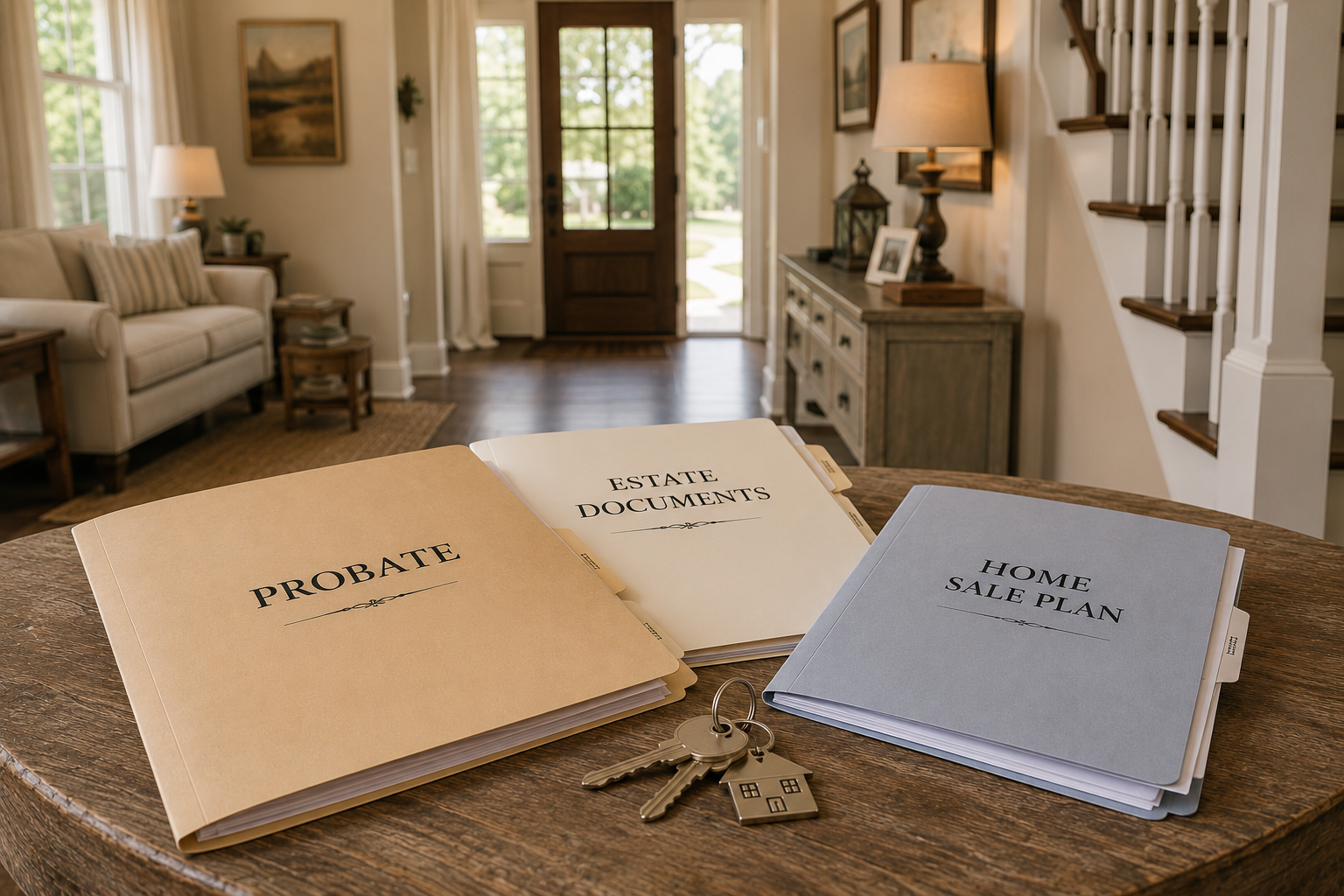
What Is Probate Real Estate and How Does It Work in Central Texas?
When someone passes away and leaves behind a home, one of the first questions the family asks is this.
What happens to the house?
And for many families across Central Texas, the answer involves a legal process called probate.
Probate can feel overwhelming at first. There are court filings, timelines, decisions about the property, and family dynamics all happening at once. Usually during one of the most difficult periods a family will ever go through.
This article explains what probate real estate is, how the process generally works in Texas, and what families in Central Texas need to know before making any decisions about a home in an estate.
This is not legal advice. An estate attorney is the right person for your specific situation. But this will give you the foundation to understand what you are dealing with and what questions to ask.
What Is Probate?
Probate is the legal process through which a deceased person's estate is settled.
It involves validating the will if there is one, identifying and valuing assets, paying any debts or taxes owed by the estate, and distributing what remains to the rightful heirs or beneficiaries.
When real estate is involved, the home typically cannot be sold until the probate process has been completed or is at a stage where the court authorizes the sale.
In Texas, probate is handled through the county courts. The specific process depends on several factors including whether the deceased had a valid will, how the property was titled, and the total value of the estate.
Does Every Home Have to Go Through Probate in Texas?
Not always.
There are situations where real estate passes outside of probate entirely. For example if the property was held in a living trust, or if it was titled as joint tenancy with right of survivorship, or if the surviving spouse has certain rights under Texas community property law.
But in many cases, especially when a home was owned solely by the person who passed away or when there is no trust in place, the property does go through probate before it can be transferred or sold.
This is one of the reasons it is important to speak with an estate attorney early in the process. Understanding how the property is titled and what documents exist shapes everything that comes next.
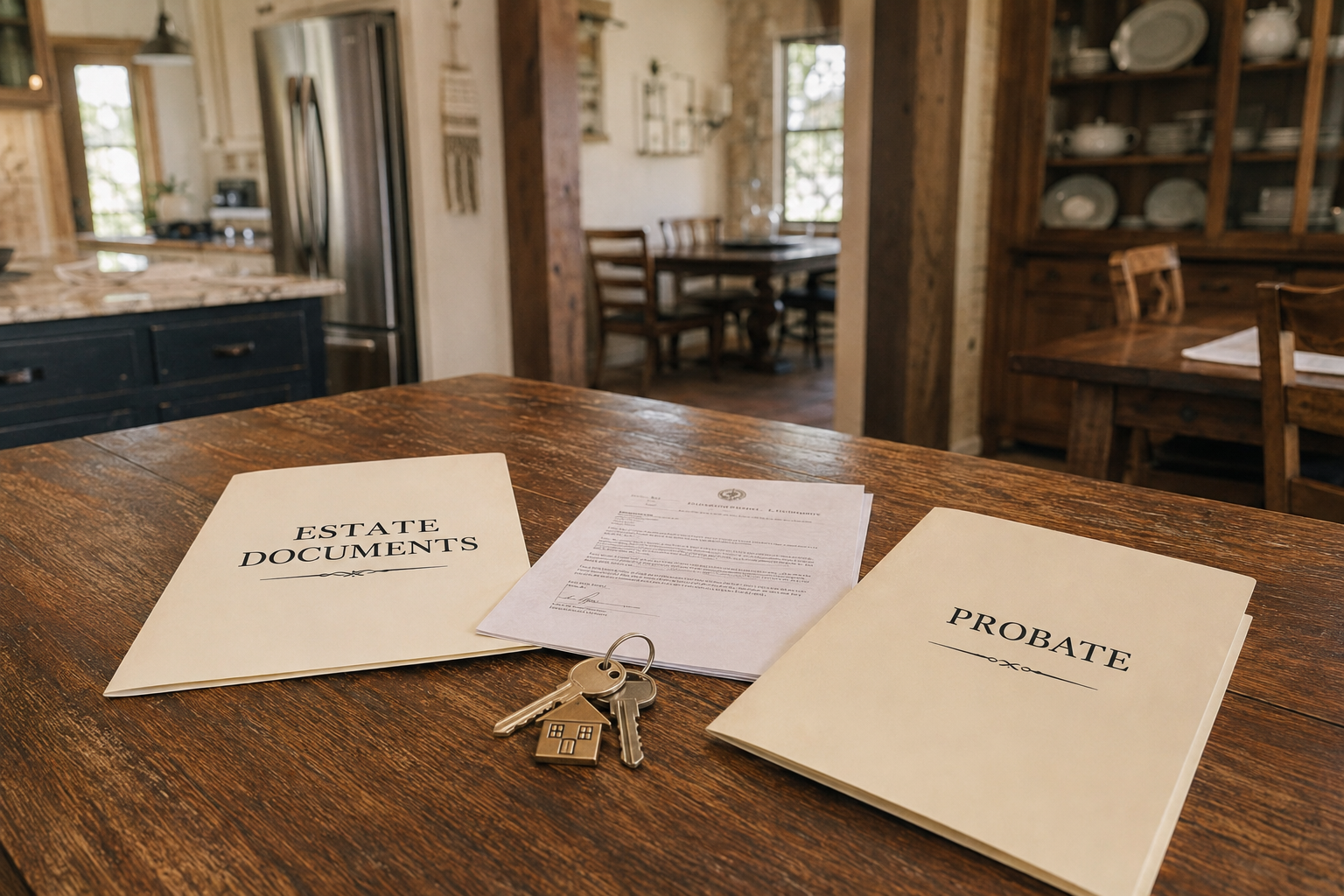
How Does Probate Work in Texas?
Texas is actually considered one of the more straightforward states for probate. The process is generally faster and less complicated than in many other states. but it still takes time and requires following specific legal steps.
Here is a general overview of how it typically works.
Filing with the court.
The process begins when someone files an application with the probate court in the county where the deceased lived. This is usually the executor named in the will or, if there is no will, someone who petitions to be named administrator of the estate.
Validating the will.
If there is a will the court reviews it to confirm it is valid. Texas allows what is called an independent administration which means the executor can often manage and sell estate assets without court approval at every step. That makes the process more efficient for most families.
Inventory and appraisal.
The estate assets including real estate are identified and valued. For a home this typically means understanding what the property is worth in the current market.
Paying debts and taxes.
Any outstanding debts owed by the estate are addressed before assets are distributed. This can include mortgages, medical bills, and other obligations.
Distribution or sale.
Once debts are settled the remaining assets are distributed to heirs according to the will or Texas intestacy laws if there is no will. If the family decides to sell the home the sale typically happens during or after this stage.
The entire process in Texas can take anywhere from a few months to over a year depending on the complexity of the estate, whether there are disputes among heirs, and how quickly the court moves.
What Happens to the Home During Probate?
This is where many families feel the most uncertainty.
During probate the home is still an asset of the estate. It needs to be maintained, insured, and secured. Property taxes continue to accrue. If there is an existing mortgage the payments still need to be made or the lender needs to be notified.
Families sometimes assume they can sell the home immediately. In most cases they cannot, at least not without the court's involvement or authorization.
Once the executor or administrator has legal authority, they can make decisions about the property including listing it for sale, accepting offers, and completing a transaction. In Texas with independent administration this authority often comes relatively early in the process.
What the family ultimately decides to do with the home depends on several factors. For families who are also weighing whether to sell the home as-is or address condition first, should I sell my house as-is in Georgetown Texas is worth reading.
•Whether heirs agree on the outcome.
•Whether there is a mortgage that needs to be addressed.
•The condition of the home and what it would take to sell it.
•The current market and what the home is realistically worth.
•Whether any heirs want to keep the property.
These conversations can be emotional. There is often no single right answer. But having clarity on the legal process and the market reality helps families make decisions from a grounded place rather than under pressure.
What If There Is No Will?
When someone passes away without a will in Texas they are said to have died intestate.
In that case Texas law determines who inherits the property. The rules depend on whether the deceased was married, had children, had surviving parents or siblings, and how the property was classified under Texas community property law.
The probate process still applies but it is often more complex because there is no will to guide the court. The court may need to determine heirs formally through a process called an heirship proceeding.
If you are navigating a situation where there is no will, an estate attorney is essential. The decisions made early in that process have a direct impact on what happens to the home.
When Should a Family Contact a Real Estate Agent/Realtor®?
You do not have to wait until probate is complete to have a conversation about the home.
In fact talking to a real estate agent/Realtor® early in the process is often helpful because it gives the family a clear picture of what the home is worth in today's market, what condition it is in, and what a realistic sale might look like.
That information is useful for the estate inventory. It helps heirs understand what they are dealing with. And it removes some of the uncertainty that makes the process feel so overwhelming.
A probate real estate agent/Realtor® who understands the legal process can work alongside the estate attorney and help the family navigate the real estate side of things without adding pressure or confusion.
The goal is clarity. Not urgency.
If you are also helping a family member think through downsizing at the same time, how do I talk to my adult children about downsizing walks through that conversation.
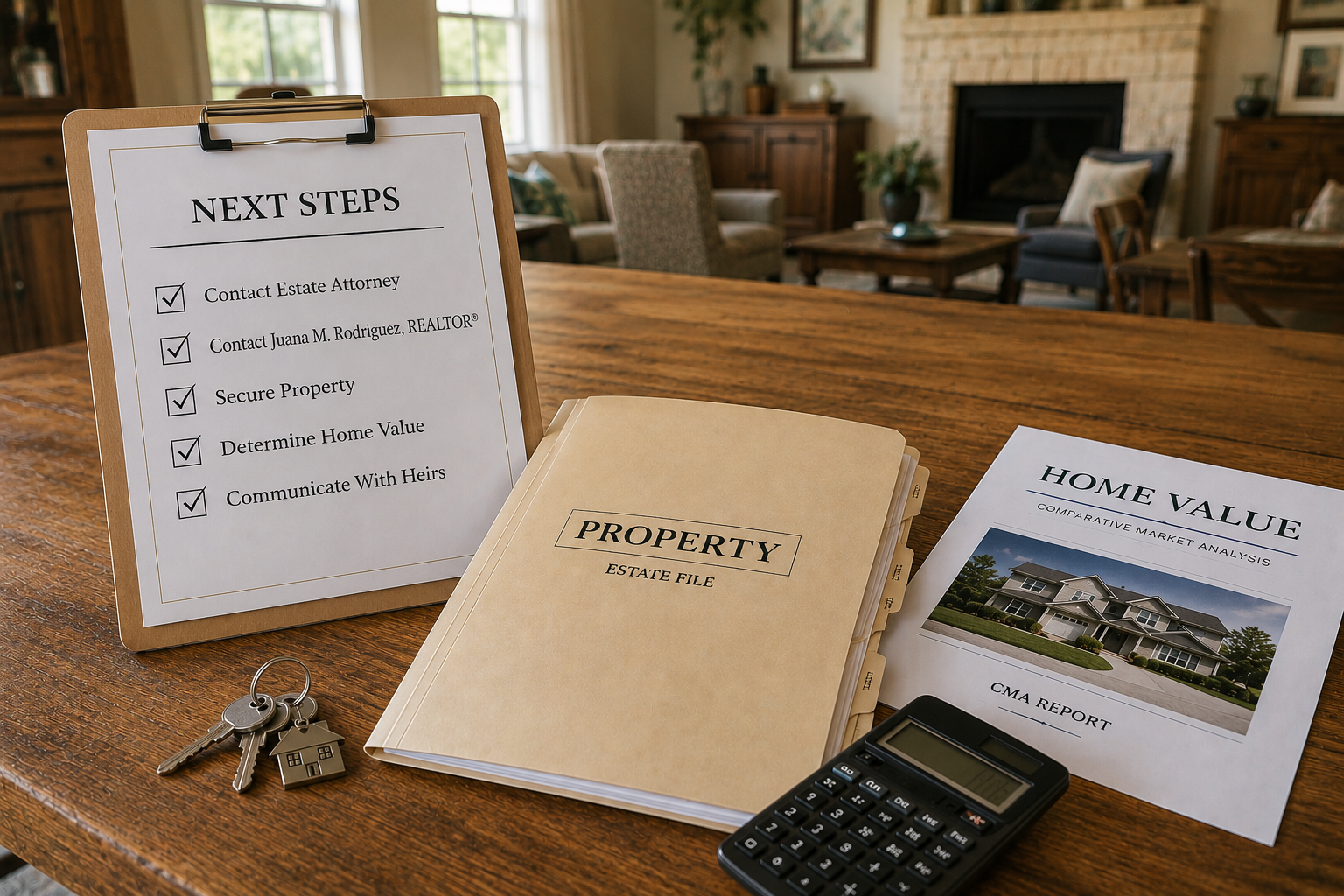
A Practical Overview for Central Texas Families
If you are dealing with a home in an estate in Georgetown, Salado, Temple, Belton, Killeen, or anywhere across Central Texas here are the general steps to keep in mind.
•Contact an estate attorney early. They will guide the legal process and determine what authority the executor or administrator has over the property.
•Contact a real estate agent/Realtor®. Get a clear picture of the home's current market value. Understanding how homes are priced in today's market is part of that clarity. How do I choose the right listing price for my home in Georgetown Texas covers that directly.This helps with the estate inventory and helps heirs make informed decisions about whether to sell, keep, or divide the property.
•Secure and maintain the home. Make sure it is insured, utilities are managed, and the property is protected while the estate is being settled.
•Understand how the home is titled. This shapes everything about how the property transfers and what the probate process looks like.
•Communicate with all heirs early. Disagreements among family members are one of the most common reasons probate takes longer than it needs to. Open, early conversations prevent delays.
•Work with professionals who understand both the legal and real estate sides. Probate involves both. Having an estate attorney and a real estate agent/Realtor® who can work together on your behalf removes significant stress.
Frequently Asked Questions
What is probate real estate in Texas?
Probate real estate refers to property that is part of a deceased person's estate and must go through the legal probate process before it can be transferred or sold. In Texas, probate is handled through county courts and the process is generally more efficient than in many other states.
How long does probate take in Texas?
The timeline varies depending on the complexity of the estate, whether there is a valid will, and whether heirs are in agreement. In Texas, independent administration allows executors to act with more flexibility which can shorten the process. Many straightforward cases are resolved within a few months to about a year.
Can you sell a house during probate in Texas?
In many cases yes, once the executor or administrator has legal authority to act on behalf of the estate. Under Texas independent administration an executor often has this authority relatively early in the process. Your estate attorney will confirm when and how a sale can proceed.
What happens if there is no will and there is a house involved?
Without a will Texas intestacy laws determine who inherits the property. The probate court may need to conduct an heirship proceeding to formally identify the heirs before the property can be transferred or sold. This process takes longer and makes legal guidance even more important.
Do heirs have to agree to sell a house in probate?
It depends on the situation and how the estate is structured. When multiple heirs have an interest in the property, disagreements can complicate and delay the process. An estate attorney can advise on options including partition actions when heirs cannot reach agreement.
What should a family do first when there is a home in an estate?
When a family inherits a home, contact an estate attorney to learn the legal process and what authority the executor or administrator has. Also contact a real estate agent/Realtor® who specializes in probate situations and request a CMA (Comparative Market Analysis) to understand the home's value. Then secure the property, confirm its value, and have open conversations with all heirs. These are the most important early steps.
Who helps families navigate probate real estate in Central Texas?
Juana M. Rodriguez is a REALTOR® with eXp Realty specializing in downsizing and probate real estate across Georgetown, Salado, Temple, Belton, Killeen, Harker Heights, and surrounding Central Texas communities. She works with families navigating estate situations and focuses on providing clarity, structure, and a calm approach during what is often a difficult time. You can reach her at (254) 312.5660 or [email protected].
Navigating a Home in an Estate?
If your family is dealing with a home in probate and you want a clear picture of where things stand, what the property is worth in today's market, and what the process looks like from the real estate side, I am glad to begin with a conversation.
No pressure. No guesswork. Just clarity on what you are working with and what your options are.
Call me at (254) 312.5660, email [email protected], or schedule a time that works for you.
Juana M. Rodriguez, REALTOR®
Guiding Your Next Chapter
Helping Central Texas homeowners downsize, buy, sell, and move forward with clarity and confidence.
(254) 312.5660 | [email protected] | https://home.juanamrodriguez.com/home
Central Texas Real Estate Answers Blog: https://centraltexasrealestateanswers.juanamrodriguez.com/answers
YouTube | Instagram | TikTok | Threads: @juanamrodrigueztx
eXp Realty